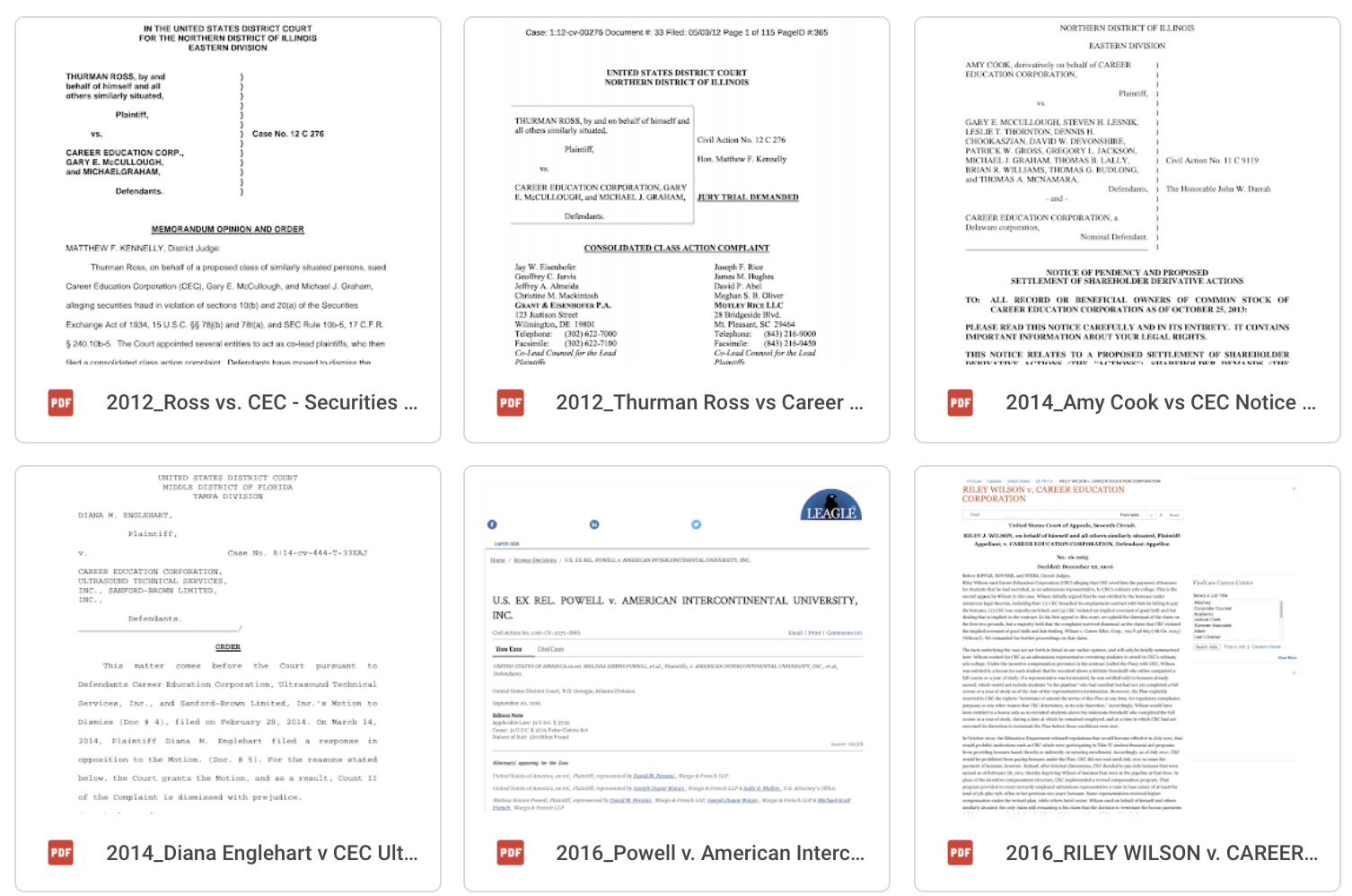
CEC STOCK REPORTING TIMELINE
CECO – Q2 2006 Career Education Earnings Conference Call
Event Date/Time: August 3, 2006 / 5:00PM ET
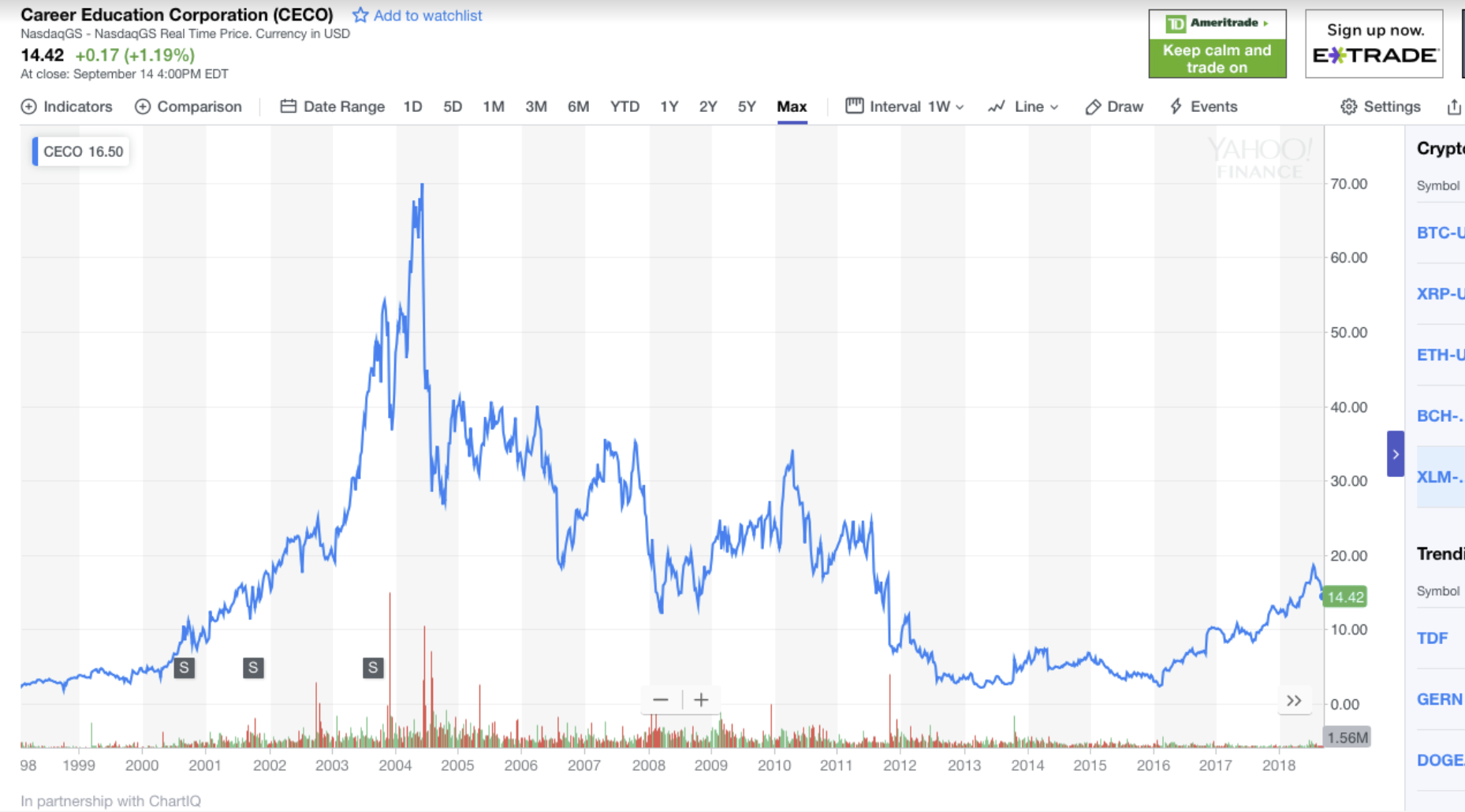
In early 2006, the Securities and Exchange Commission closed its investigation into allegations that CEC had inflated attendance figures. This news was welcomed as shares fell from its peak of $70 to $31 over a two year period. However, the feeling didn’t last when the first quarter earnings showed a decrease in enrollment, and the annual forecast wasn’t positive. The shares dropped another 14% and shareholders were clearly upset over their losses, even after a wall street analysis claimed CEC had cleaned up its act, further showing they were not operating with their customers nor in the students best interest.
NYT provided a chart showing the number of recruiters that were hired compared to Career Services advisors at CEC education institutions. Using sales, increased enrollment, and loans issued to students as their recipe for success, CEC showed it was driven by shareholder interests and corporate tax-funded profits, instead of by students education.
Bostic spent $2 million for his unsuccessful campaign to replace CEC Board Members. In response, CEC spent more than double the amount in shareholders money defending its practices. Expensive infighting was one of many ways CEC used their Title IV funded profits to cover-up their illegal business approaches.
During the August 3, 2006 – CECO – Q2 2006 Career Education Earnings Conference Call, John Larson began by first addressing the stocks decline in value and how CEC planned to address the issue, “by hiring more admission representatives and providing bigger sales bonuses”.
Pat Pesch, the company’s CFO, in this same call, discussed loan approval being down and CEC finding creative ways to get around the new DoED co-signing standards. Their plan was to also reduce capital spending – corresponding with testimony highlighting Brooks’ neglect of campus upkeep, failure to update or provide equipment, and “firing” instructors, support and administrative staff in the years following. During the Q&A, Pesch discussed closing of as many as 20 underperforming campuses to boost gains.
“The approval rate for non-recourse alternative loans during the second quarter was approximately 8% lower than previous levels, primarily due to changes in co-signer requirements that were imposed on non-recourse alternative loans. We have relaxed the changes in our co-signer requirement, and are working diligently to bring alternative loan approval rates back to historical levels. As we indicated last quarter, with respect to culinary students, we are also diligently assessing other changes—other changes in the extension of credit that will responsibly balance student needs, growth opportunities, cash generation, and profitability”. [Pat Pesch – CFO of CEC 1999 – 2007]
NASDAQ CECO 2001 – 2016 Annual Reports

Lawsuits filed against CEC